

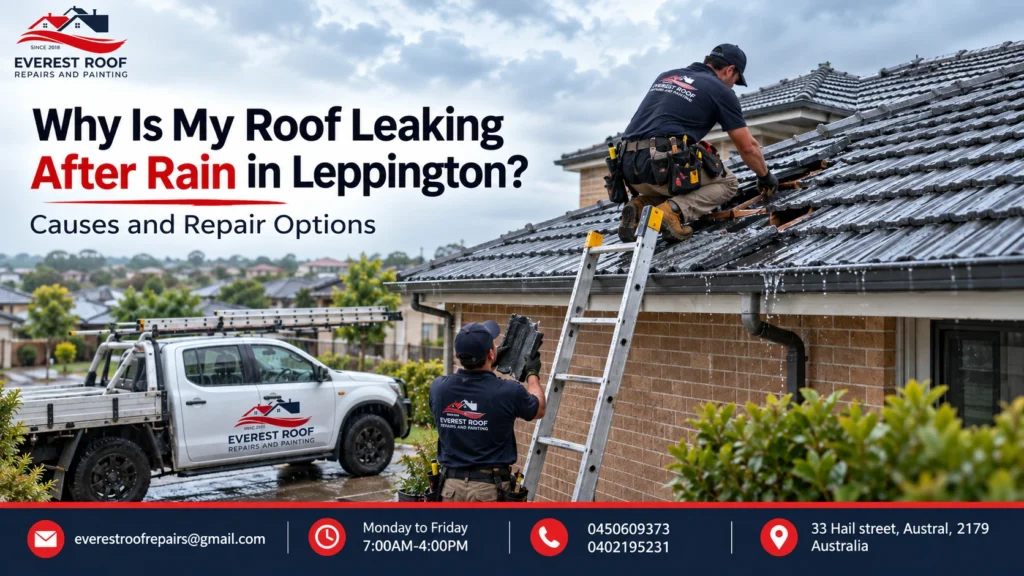
Rain can quickly expose roofing problems that may not be noticeable during dry weather. If you have noticed dripping water, damp patches, ceiling stains, or moisture after recent rainfall, roof leak repair Leppington may be needed before the problem causes further damage.
Everest Roof Repairs provides professional roofing services across Sydney, including roof leak detection, roof repairs, damaged tile repairs, ridge capping repairs, flashing work, and emergency make-safe services. Based in Austral, the team services surrounding areas, including Leppington.
Why Does a Roof Start Leaking After Rain?
A roof can appear to be in good condition from the ground while still having small areas where water can enter. During light rain, these weaknesses may not cause an obvious problem. However, heavier or prolonged rainfall can expose damaged or deteriorated sections.
Common causes include:
- Cracked or displaced roof tiles
- Damaged flashing
- Loose ridge capping
- Deteriorated roof bedding or mortar
- Damaged roof penetrations
- Problems around skylights and vents
- Water overflowing around roof edges
- General roof deterioration
A leak that appears after rain should not automatically be considered a minor issue. Water can travel underneath roofing materials before eventually appearing on a ceiling or wall.
Common Signs of a Roof Leak in Leppington
Sometimes the first sign of a roof problem is not water dripping directly from the ceiling.
You may notice:
- Brown or yellow ceiling stains
- Damp patches after rainfall
- Peeling or bubbling paint
- Mould or musty smells
- Water dripping from the ceiling
- Damp insulation
- Moisture around roof openings
- Repeated water damage in the same area
If these signs appear after rain, arranging a professional inspection can help identify whether the problem is coming from the roof or another source.
What Can Cause Roof Leaks After Rain?
Broken or Displaced Roof Tiles
Roof tiles can crack, break, or move out of position due to age, weather exposure, or physical damage. Even a relatively small opening can allow rainwater to enter the roof structure.
A professional inspection can determine whether individual tiles need replacement or whether surrounding areas have also been affected.
Damaged Roof Flashing
Flashing helps protect joints and transitions around different parts of a roof. When flashing becomes loose, damaged, or deteriorated, rainwater can enter through these vulnerable areas.
If water repeatedly appears around the same section of the ceiling, flashing should be considered as one possible source.
Ridge Capping Problems
Ridge caps sit along the highest points of tiled roofs. Cracked mortar, deteriorated bedding, or loose ridge caps can create pathways for rainwater.
Depending on the condition, the affected section may require rebedding, repointing, or other roof repairs.
Roof Penetrations
Skylights, vents, pipes, and other roof penetrations can become potential entry points for water when seals or surrounding materials deteriorate.
These areas require careful inspection because the actual point of entry may not always be obvious from inside the property.
What to Do + Repair Options + Checklist
What Should You Do When Your Roof Leaks After Rain?
The first priority is safety. Do not climb onto a wet roof to investigate the problem yourself. Wet roofing surfaces can become extremely slippery.
Inside the property, move furniture and belongings away from the affected area where possible. If water is close to electrical fittings, avoid touching the area and seek appropriate assistance.
Once it is safe to do so, arrange a professional roof inspection.
The purpose of an inspection is not simply to find the visible stain. The roofer needs to identify where water is entering and determine what repair is actually required.
For homeowners dealing with roof leak repair in Leppington, identifying the source correctly is an important part of preventing the same problem from returning.
What Repairs Might Your Roof Need?
The required repair will depend on the condition of the roof and the source of the water entry.
Possible repairs may include:
- Replacement of broken roof tiles
- Repair of displaced tiles
- Ridge capping repairs
- Repointing and rebedding
- Flashing repairs
- Roof penetration repairs
- Skylight leak repairs
- Emergency make-safe work
- Roof restoration where deterioration is more extensive
A professional assessment helps determine whether the problem is isolated or part of a wider roofing issue.
Roof Leakage Inspection Checklist
What You Notice | Possible Cause | Recommended Action |
Ceiling stain after rain | Water entering through the roof | Arrange roof inspection. |
Active dripping | Ongoing water ingress | Request prompt assistance. |
Broken roof tile | Damaged roof covering | Have tile replaced |
Water near the roof edge | Flashing or drainage issue | Inspect the roof edge. |
Leak around skylight | Seal or flashing problem | Inspect penetration. |
Repeated leak in same area | The underlying issue may remain. | Request a detailed inspection. |
Loose ridge cap | Ridge deterioration | Check bedding and pointing. |
Remember that the visible water stain may not be directly underneath the actual entry point. Water can travel along roofing structures before reaching the ceiling.
When Does a Roof Leak Need Urgent Attention?
If water is actively entering your home, it is better to arrange an assessment promptly rather than waiting for the next rainfall.
This is particularly important when:
- Water is actively dripping.
- Ceiling stains are getting larger.
- Multiple areas are becoming damp.
- Water is entering around electrical fittings.
- Roof tiles are visibly damaged.
- The same leak keeps returning.
- Heavy rain is expected again.
Everest Roof Repairs also provides emergency make-safe services for situations where immediate protection is required. Depending on the circumstances, this may involve securing damaged areas, temporary repairs, tarpaulin installation, or sealing affected sections.
How Can You Reduce the Risk of Future Roof Leaks?
Regular roof inspections can help identify developing problems before they become major leaks.
After significant rainfall, homeowners can look for visible warning signs such as new ceiling stains, displaced tiles, or water overflowing around roof edges.
However, avoid climbing onto the roof yourself. A professional can inspect areas that are difficult or unsafe to access and determine whether repairs are required.
Why Choose Everest Roof Repairs?
Everest Roof Repairs has completed 500+ projects successfully, fixed 300+ roof leaks across Sydney, and has 8+ years of roofing experience.
The company provides roofing services, including leak detection, roof repairs, damaged tile repairs, ridge capping repairs, flashing work, roof restoration, and emergency make-safe solutions.
For homeowners looking for roof leak repair in Leppington, the focus should be on identifying the actual cause of the leak rather than simply covering the visible signs of water damage.
Roof Damage Inspection
If you have recently noticed water entering your home after rain, a professional roof damage inspection
When Should You Arrange a Roof Inspection?
You should consider arranging an inspection if your roof has:
- Developed a new leak
- Sustained visible weather damage
- Broken or displaced tiles
- Loose ridge capping
- Damaged flashing
- Repeated water entry
- Signs of deterioration
Getting the problem assessed early can help you understand the condition of the roof and decide what action is appropriate.
Frequently Asked Questions
Why is my roof leaking only when it rains in Leppington?
A roof may leak only during rainfall because water needs to reach a particular damaged area before entering the roof structure. Heavy rain can expose weaknesses that are not noticeable during dry weather.
Should I repair a roof leak immediately?
If water is entering the property, it is sensible to arrange an inspection promptly. Delaying an active leak can allow moisture to affect ceilings, insulation, and other internal areas.
How can I find where my roof is leaking?
The visible ceiling stain may not be directly below the source of the leak. Water can travel underneath roofing materials, so professional inspection may be needed to identify the actual entry point.
Can a small roof leak become a bigger problem?
Yes. Repeated water entry can contribute to deterioration of internal building materials and may result in more extensive repairs if the underlying cause is left unresolved.
What should I do if my roof starts leaking during heavy rain?
Avoid climbing onto the wet roof. Protect belongings from water where possible and stay away from affected electrical areas. Once it is safe, arrange professional roofing assistance to assess the problem.
Conclusion
A leaking roof after rainfall should not be ignored simply because the weather becomes dry again. The visible stain may only be the first sign of a roofing problem that needs attention.
If you are experiencing water entry, damaged tiles, loose ridge capping, flashing problems, or another roofing issue, a professional inspection can help identify the cause and determine the appropriate repair.
For homeowners looking for roof leak repair in Leppington, Everest Roof Repairs can assess the condition of the roof and recommend the appropriate next step.
Need Help With a Leaking Roof?
Don’t wait for the next downpour to find out if the problem has become worse. Contact Everest Roof Repairs to arrange a roof inspection and discuss the repair options for your property.