

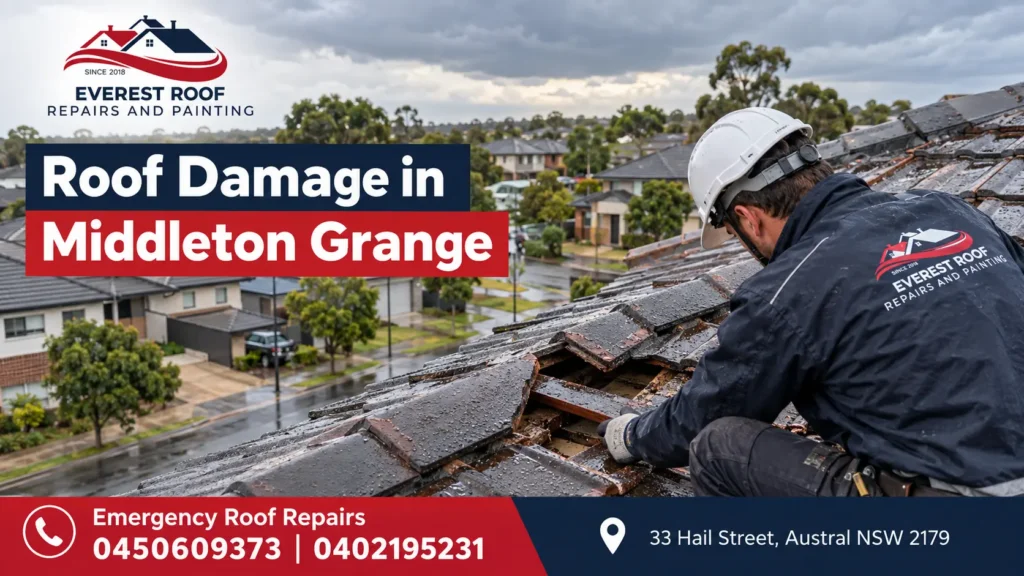
Heavy rain can reveal roofing problems that may not be obvious during normal weather. For homeowners experiencing roof damage in Middleton Grange, signs such as water marks, damaged tiles, damp areas, overflowing gutters, or moisture in the roof space can become noticeable after periods of heavy rainfall.
At Everest Roof Repairs & Painting, we help homeowners across Middleton Grange and surrounding South West Sydney areas with roof repairs, roof inspections, roof restoration, roof leak investigations, and other roofing requirements. When bad weather exposes a problem, identifying the issue early can help homeowners understand what needs attention before the situation becomes more serious.
What Can Heavy Rain Reveal About Your Roof?
Heavy rain does not necessarily mean that the roof has suddenly developed a new problem. In many cases, rainfall exposes an existing weakness that was already present within the roofing system.
After significant rainfall, homeowners may notice:
- New water marks on ceilings or walls
- Damp patches inside the home
- Cracked or displaced roof tiles
- Moisture around roof fixtures
- Deteriorated flashing
- Problems around roof valleys or junctions
- Gutters overflowing during rainfall
- Downpipes failing to drain properly
These signs can have different causes, so it is important not to assume that every water-related problem comes from the same part of the roof.
Why Does Heavy Rain Make Roofing Problems More Noticeable?
A roof can look fine from the ground while still having vulnerable areas. When heavy rainfall occurs, large amounts of water move across the roof surface and through its drainage system. Existing weaknesses can become much easier to notice under these conditions.
For example, a cracked or displaced tile may allow water to move beneath the roof covering. Damaged flashing around joints, walls, vents, or other openings can also provide a pathway for moisture.
Gutters and downpipes are another important part of the system. If leaves, dirt, or debris restrict drainage, rainwater may overflow instead of being carried away from the property correctly.
For homeowners in Middleton Grange, checking for these warning signs after heavy rain can help determine whether a professional assessment may be needed.
7 Things to Check After Heavy Rain
1. Look for New Ceiling or Wall Marks
Check ceilings and upper sections of walls for new stains, damp patches, peeling paint, or discolouration. These may indicate that moisture has entered somewhere above the affected area.
Keep in mind that an internal water mark does not always show the exact point where water entered. Moisture can travel along roofing materials before becoming visible inside the property.
2. Look for Damaged or Displaced Roof Tiles
From a safe position on the ground, check whether any visible roof tiles appear cracked, broken, or out of alignment.
Strong weather can expose weaknesses in tiled roofing, but homeowners should avoid climbing onto wet roofing surfaces to investigate the problem themselves.
3. Check Visible Roof Flashing
Flashing helps direct rainwater away from vulnerable sections of the roof. If it becomes loose, damaged, or deteriorated, heavy rainfall can make the issue more noticeable.
4. Check Gutters and Downpipes
After heavy rain, look for obvious signs of overflowing gutters or poor drainage. Water that cannot flow through the drainage system properly may create additional problems around the roofline.
5. Pay Attention to Roof Valleys and Junctions
Roof valleys and junctions can handle significant amounts of rainwater. Debris buildup, deterioration, or visible moisture around these areas can indicate that further inspection is necessary.
6. Look for Moisture in the Roof Space
If the roof space can be accessed safely, check for damp insulation, moisture, water marks, or other unusual signs following rainfall.
7. Consider a Professional Inspection
If you notice visible damage or unexplained moisture after heavy rain, arranging a professional inspection can help identify the source of the problem and determine what type of work may be required.
A proper assessment can look beyond the first visible symptom and examine the relevant roofing components, helping homeowners understand whether they need a minor repair, restoration work, or attention to the roof drainage system.
What Can Happen If Roof Damage Is Left Unchecked After Heavy Rain?
Heavy rainfall can expose roofing problems that may initially appear minor. A cracked tile, damaged flashing, or drainage issue can become more noticeable after several hours of wet weather. For homeowners experiencing roof damage in Middleton Grange, understanding what to look for after heavy rain can help them decide when professional attention may be needed.
Why Should You Check Your Roof After Heavy Rain?
Rainwater can find its way through small weaknesses in roofing materials. Sometimes the first sign appears inside the home rather than on the roof itself. You may notice a damp patch, water mark, peeling paint, or moisture around the ceiling.
These signs should not automatically be assumed to have the same cause. Water can travel beneath roofing materials before becoming visible inside the property, making the actual source difficult to identify without a proper assessment.
What Parts of the Roof Should You Look At?
After heavy rain, homeowners can look for visible signs of damage from a safe position on the ground. Broken or displaced tiles may indicate that the roof has been affected by recent weather.
Flashing is another area worth paying attention to. It protects vulnerable points where different sections of the roof meet. If flashing becomes loose or deteriorated, rainwater may enter through these areas.
Roof valleys and junctions can also receive significant amounts of rainfall. Debris or visible deterioration around these sections may indicate that further inspection is required.
Don’t Forget Gutters and Downpipes
Heavy rain can put additional pressure on the roof drainage system. Gutters and downpipes need to move rainwater away from the property efficiently.
After rainfall, look for:
- Water overflowing from gutters
- Leaves or debris blocking drainage
- Sagging gutter sections
- Slow-flowing downpipes
- Water collecting around the property
- Damaged gutter connections
Repeated overflow may indicate that the drainage system needs cleaning, repair, or further assessment.
When Should You Arrange a Professional Inspection?
A professional inspection can be useful when you cannot identify the source of a roofing problem or when visible damage appears after severe weather.
You may want to arrange an assessment if you notice new ceiling stains, dampness in the roof space, damaged tiles, visible flashing problems, or repeated water entry.
For homeowners dealing with roof damage in Middleton Grange, an inspection can help identify the affected areas and determine whether repair or restoration work is appropriate.
Why Should You Avoid Delaying Repairs?
A small roofing problem may not remain small if it continues to be exposed to rainfall. Moisture can affect surrounding materials and may eventually create additional problems inside the property.
Rather than relying only on a temporary fix, it is better to understand the source of the issue first. Once the cause has been identified, the appropriate repair can be planned according to the condition of the roof.
If heavy rain has recently exposed a roofing problem, arranging a professional assessment can help you understand what needs attention and what steps should be taken next.
What to Do After Finding Roof Damage in Middleton Grange?
Once heavy rain has passed, it is important to understand what action your roof may need. Some problems can be addressed with a straightforward repair, while others may require more detailed restoration work. A professional assessment can help determine the right approach instead of relying on guesswork.
What Should You Do After Finding Roof Damage?
If you notice damaged tiles, water marks, loose roofing materials, or other problems after heavy rain, avoid climbing onto the roof yourself. Wet roofing surfaces can be slippery and difficult to assess safely.
Instead, document any visible signs from a safe location and arrange a professional assessment if the problem appears significant or continues after the weather improves.
For homeowners looking for roof inspection in Middleton Grange, an inspection can help identify the affected roofing areas and determine what type of work may be required.
When Does a Roof Need Professional Attention?
Professional attention may be appropriate when you notice:
- Repeated water entry
- Cracked or displaced tiles
- Damaged flashing
- Problems around roof valleys
- Persistent ceiling stains
- Gutter or downpipe problems
- Visible storm or wind damage
- Deteriorated roofing materials
Addressing these issues early can help prevent further deterioration and give homeowners a clearer understanding of the condition of their roof.
Roof Repair or Roof Restoration: What Is the Difference?
Roof repair generally focuses on a specific roofing problem, such as damaged tiles, flashing, leaks, or other individual components.
Roof restoration can involve more extensive work when several parts of the roofing system require attention. Depending on the roof’s condition, this may include repairs, preparation, cleaning, painting, or other restoration work.
The appropriate option depends on the condition and age of the roof and the extent of the damage.
Roofing Services Available in Southwest Sydney
Everest Roof Repairs & Painting provides roofing-related services for homeowners across South West Sydney, including:
- Roof repairs
- Roof inspections
- Roof leak investigation
- Roof restoration
- Roof painting
- Roof tile repairs
These services can help homeowners address individual roofing problems as well as broader maintenance and restoration requirements.
Areas We Service
Our roofing services are available across Southwest Sydney and surrounding areas, including:
- Middleton Grange
- Liverpool
- Austral
- Leppington
- Edmondson Park
- West Hoxton
- Hoxton Park
- Prestons
- Casula
- Camden
- Narellan
- Oran Park
- Gregory Hills
- Gledswood Hills
- Harrington Park
- Mount Annan
- Campbelltown
If you are located in or around these areas and have noticed roofing problems following heavy rain or strong weather, you can arrange an assessment to understand what work may be required.
Frequently Asked Questions
1. Can heavy rain damage a roof without causing an immediate leak?
Yes. Some roofing problems may not become visible inside the property immediately. Damaged tiles, flashing, valleys, or drainage components can become problematic over time.
2. Should I climb onto my roof to check for damage?
It is better to avoid climbing onto a wet roof. A professional can assess difficult-to-reach areas more safely.
3. What are common signs of roof damage after heavy rain?
Water marks, damp ceilings, displaced tiles, damaged flashing, moisture in the roof space, and gutter overflow can all indicate that further assessment may be needed.
4. Can damaged roof tiles be repaired?
In some situations, individual damaged tiles can be repaired or replaced. The appropriate solution depends on the condition of the surrounding roofing system.
5. Do gutters need to be checked after heavy rainfall?
Yes. Overflowing gutters, debris buildup, and poor downpipe drainage can affect how rainwater moves away from the roof and property.
6. When should I arrange a roof inspection?
If you notice new water marks, visible roof damage, repeated leaks, or problems following strong weather, a professional inspection can help identify the cause.
Conclusion
Heavy rain can expose roofing problems that may otherwise remain unnoticed. From damaged tiles and flashing to gutter and drainage issues, different parts of the roofing system can contribute to water-related problems.
If you have noticed roof damage after heavy rain in Middleton Grange, getting the condition assessed can help you understand whether you need a targeted repair, maintenance work, or more extensive restoration.
Everest Roof Repairs & Painting provides roofing services across Middleton Grange and surrounding South West Sydney suburbs. A professional assessment can help identify the problem and determine the appropriate next step before further weather causes additional issues.