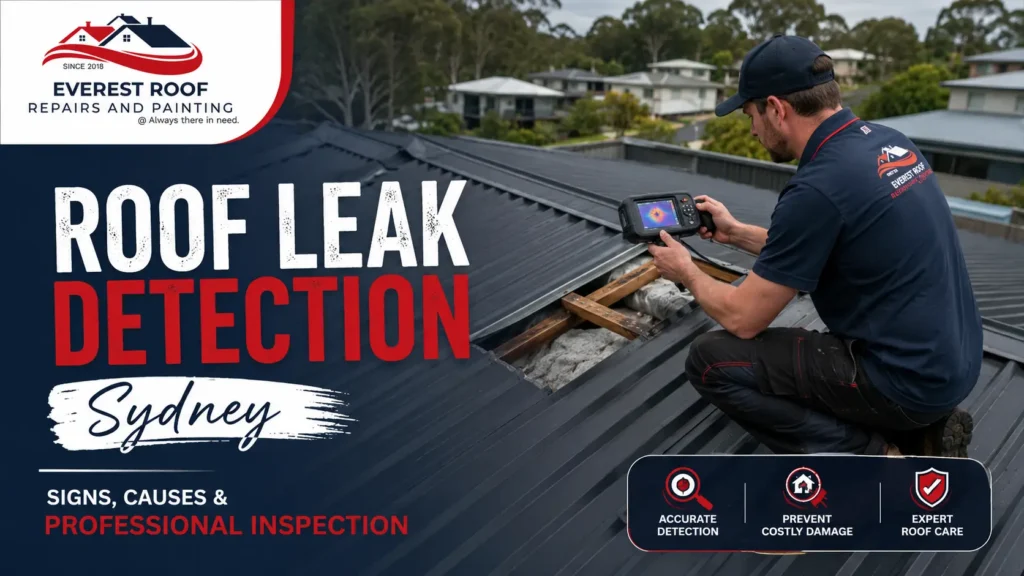
A small roof leak rarely stays small for long. What starts as a minor water stain on the ceiling can quickly lead to damaged insulation, mold growth, rotting timber, electrical hazards, and expensive structural repairs. That’s why Roof Leak Detection Sydney is one of the most important roofing services for homeowners and businesses looking to protect their property before hidden damage becomes a major problem.
Whether your roof has been affected by heavy rain, aging materials, cracked roof tiles, damaged flashing, or blocked gutters, identifying the exact source of the leak is the first step toward a long-lasting repair. In this guide, you’ll learn how professional roof leak detection works, the most common warning signs, the leading causes of roof leaks in Sydney, and why early action can save you thousands of dollars in future repairs.
Trusted Roof Leak Specialists at Everest Roof Repairs
At Everest Roof Repairs, we help homeowners and businesses across Sydney identify and repair roof leaks with precision and long-term solutions. Our experienced roofing team understands how Sydney’s changing weather conditions affect different roofing systems, allowing us to locate hidden leaks that are often overlooked during a basic inspection.
Instead of applying temporary fixes, we focus on identifying the root cause of every leak and recommending the most suitable repair solution based on your roof’s condition. Whether you have a tiled roof, metal roof, Colorbond roof, or commercial roofing system, our goal is to restore your roof’s integrity and prevent future water damage.
What Is Roof Leak Detection?
Roof leak detection is the process of identifying the exact location where water is entering your roof system. In many cases, the visible water stain inside your home is not directly below the actual leak. Rainwater often travels along roof timbers, insulation, rafters, or ceiling cavities before becoming visible indoors.
A professional roof inspection involves examining every component that could allow water penetration, including:
- Roof tiles
- Metal roofing sheets
- Roof flashing
- Ridge capping
- Valleys
- Roof penetrations
- Skylights
- Gutters and downpipes
- Roof vents
- Chimneys
Rather than guessing where the leak may be, experienced roofers follow a systematic inspection process to accurately identify the problem before recommending repairs.
Why Early Roof Leak Detection Matters
Many homeowners delay roof inspections because the leak appears small or only occurs during heavy rain. Unfortunately, water damage continues even when it is not immediately visible.
Early leak detection helps prevent the following:
- Internal ceiling damage
- Timber rot
- Mould and mildew growth
- Electrical safety hazards
- Insulation damage
- Expensive structural repairs
- Premature roof replacement
Addressing the issue early is almost always more affordable than repairing extensive water damage later.
Common Signs Your Roof May Have a Leak
Not every roof leak is obvious. In many homes, the warning signs appear weeks or even months before water starts dripping from the ceiling.
Water Stains on Ceilings
Brown or yellow stains are one of the earliest indicators that moisture is entering the roof cavity.
Damp Walls
Moisture traveling through wall cavities can create peeling paint, bubbling plaster, or damp patches.
Mould Growth
Persistent moisture creates the ideal environment for mold, especially in roof spaces and ceilings.
Dripping Water During Rain
If water only appears during storms or heavy rainfall, your roofing system may have damaged flashing, cracked tiles, or deteriorated seals.
Sagging Ceiling
A sagging ceiling usually indicates trapped water and should be inspected immediately to avoid collapse.
Missing or Broken Roof Tiles
Strong winds and aging materials can leave exposed sections where rainwater enters the roof structure.
Rust Around Roof Fixtures
Rust around screws, flashing, vents, or metal roofing panels often signals prolonged water exposure.
Higher Energy Bills
Wet insulation loses its thermal performance, making heating and cooling systems work harder throughout the year.
When Should You Book a Roof Inspection?
Consider arranging a professional inspection if:
- Your roof is more than 10 years old.
- You notice water stains after heavy rain.
- A recent storm has affected your area.
- Roof tiles have become loose or cracked.
- Flashing appears damaged or lifted.
- You are buying or selling a property.
- Your roof has not been professionally inspected for several years.
Regular inspections can identify minor issues before they become costly repairs.
What Causes Roof Leaks in Sydney?
Sydney’s weather conditions expose roofs to intense sunlight, heavy rainfall, strong winds, and seasonal storms. Over time, these environmental factors weaken roofing materials and increase the likelihood of leaks.
Cracked or Broken Roof Tiles
Roof tiles naturally age over time. Storm damage, falling branches, or foot traffic can crack tiles and allow water to penetrate beneath the roof covering.
Damaged Roof Flashing
Flashing protects vulnerable roof junctions around chimneys, skylights, valleys, and vents. When flashing corrodes, lifts, or separates, rainwater can enter the roof structure.
Blocked Gutters
Leaves, dirt, and debris prevent proper drainage. Overflowing gutters force water back underneath roofing materials, increasing the risk of leaks.
Deteriorated Roof Valleys
Roof valleys handle a large volume of rainwater. Rust, corrosion, or damaged valley linings often become major sources of roof leaks.
Ageing Roofing Materials
Exposure to UV rays, moisture, and changing temperatures gradually reduces the lifespan of roofing components.
Poor Roof Installation
Incorrect installation methods, low-quality workmanship, or unsuitable materials can cause recurring roof leaks even on relatively new roofs.
Storm Damage
High winds can loosen ridge capping, displace roof tiles, damage flashing, and create openings where rainwater enters the roof.
Common Roof Leak Causes and Their Impact
Roof Issue | Possible Consequence | Recommended Action |
Cracked roof tiles | Water enters roof cavity | Replace damaged tiles |
Damaged flashing | Hidden roof leaks | Repair or replace flashing |
Blocked gutters | Overflow and ceiling damage | Clean gutters regularly |
Rusted roof valleys | Water penetration | Valley restoration |
Loose ridge capping | Rainwater entry | Re-bed and re-point ridge caps |
Storm damage | Multiple roof leaks | Professional roof inspection |
Ageing roof materials | Ongoing deterioration | Preventative maintenance |
Protect Your Property Before Minor Leaks Become Major Repairs
A leaking roof doesn’t repair itself, and waiting usually leads to more expensive damage. If you’ve noticed water stains, damp ceilings, cracked roof tiles, or signs of storm damage, arranging a professional inspection now can help prevent unnecessary repair costs later.
Need a reliable roofing team? Visit https://everestroofrepairs.com.au to learn more about our roofing services or request a professional inspection from experienced local roof repair specialists across Sydney.
How Does a Professional Roof Leak Inspection Work?
Many homeowners assume that a roof inspection simply involves climbing onto the roof and looking for broken tiles. In reality, professional leak detection is a detailed process designed to identify both visible and hidden issues that may not be obvious during a quick visual check.
At Everest Roof Repairs, every inspection follows a systematic approach to ensure the true source of the leak is identified before any repair work begins. This helps eliminate unnecessary repairs and ensures the problem is resolved correctly the first time. If an active leak is found, our team can recommend the most suitable solution through our Roof Leak Repair Austral NSW service.
Step 1: Discussing the Problem
Every inspection begins with understanding the property’s history.
Our roofing specialists ask questions such as:
- When was the leak first noticed?
- Does it only leak during heavy rain?
- Has the roof been repaired before?
- Which rooms are affected?
- Has the leak become worse over time?
This information helps narrow down possible causes before the physical inspection begins.
Step 2: Internal Roof Inspection
The inspection starts inside the property because visible ceiling damage often provides important clues.
During the internal inspection, we check:
- Ceiling stains
- Damp plaster
- Peeling paint
- Mould growth
- Roof cavity moisture
- Wet insulation
- Timber framing
- Water paths inside the roof space
Understanding how water travels through the roof structure helps locate the actual entry point, which is often several meters away from the visible damage. Once the source is confirmed, timely Roof Repairs Sydney can prevent further structural damage.
Step 3: External Roof Assessment
After inspecting the interior, the roofing team performs a detailed external assessment.
Every critical roofing component is examined, including:
- Roof tiles
- Metal roofing sheets
- Ridge capping
- Roof flashing
- Roof valleys
- Gutters
- Downpipes
- Skylights
- Chimneys
- Roof vents
- Roof penetrations
- Roof sealants
Each section is carefully checked for signs of deterioration, movement, corrosion, or storm damage.
Step 4: Identifying the Root Cause
Rather than recommending immediate repairs based on assumptions, the inspection focuses on identifying the exact source of water entry.
This ensures repairs are targeted at the actual problem instead of treating only the visible symptoms.
Once the inspection is complete, homeowners receive a clear explanation of:
- The source of the leak
- The condition of the roof
- Recommended repairs
- Areas requiring future maintenance
- Preventative measures to reduce future leaks
If widespread deterioration is discovered, a complete Roof Restoration Sydney solution may be recommended instead of isolated repairs.
Professional Roof Leak Detection Methods
Modern roof inspections combine experience with proven inspection techniques to locate leaks accurately.
Visual Roof Inspection
The first stage involves carefully examining every roofing component for visible signs of wear or damage.
This includes checking:
- Cracked roof tiles
- Rusted metal sheets
- Loose ridge capping
- Damaged flashing
- Corroded valleys
- Blocked gutters
Moisture Tracking
Water rarely drips directly below the entry point.
Professional roofers trace moisture patterns through the roof cavity to determine where rainwater is actually entering the structure.
Flashing Inspection
Roof flashing is one of the most common sources of leaks.
Every flashing joint around skylights, chimneys, vents, and valleys is inspected for:
- Rust
- Separation
- Lifting
- Cracks
- Missing sealant
Where flashing damage is identified, prompt Roof Flashing Repairs help prevent future water penetration and costly structural issues.
Roof Valley Assessment
Roof valleys handle significant amounts of rainwater during storms.
Our inspection includes checking for:
- Rust
- Blockages
- Corrosion
- Damaged valley trays
- Overflow points
Storm Damage Assessment
Strong winds often loosen roofing materials without homeowners noticing immediately.
After severe weather, we inspect for:
- Lifted flashing
- Missing roof tiles
- Loose ridge capping
- Debris impact damage
- Water entry points
If storm-related damage is found, immediate emergency roof repairs in Sydney can minimize additional water damage and keep your property protected.
Common Areas Where Roof Leaks Begin
Although every property is different, certain roofing components are far more likely to develop leaks than others.
Roof Flashing
Flashing protects roof joints where different materials meet.
Over time it may crack, corrode, or separate, allowing rainwater to enter beneath the roofing system.
Roof Valleys
Valleys carry a large volume of stormwater.
Blocked or damaged valleys are one of the leading causes of roof leaks throughout Sydney.
Roof Tiles
Broken, cracked, or displaced roof tiles create direct entry points for water.
Regular inspections combined with professional Roof Inspection Services help identify damaged tiles before significant internal damage occurs.
Skylights
Poor sealing around skylights often allows water to enter during heavy rain.
This issue commonly develops as sealants age.
Gutters and Downpipes
Blocked gutters prevent rainwater from draining correctly.
Overflowing water can back up beneath roofing materials and eventually enter the roof cavity. Scheduling regular Roof and Gutter Cleaning helps reduce this risk and keeps your drainage system functioning efficiently.
Why Homeowners Across Sydney Choose Everest Roof Repairs
Choosing the right roofing company is just as important as identifying the leak itself. Our team focuses on accurate inspections, honest recommendations, and long-term repair solutions rather than temporary fixes.
We’ve Been Experienced Since
500+ Projects Completed Successfully
From minor residential roof leaks to complex commercial roofing issues, we have successfully completed hundreds of roofing projects across Sydney.
300+ Roof Leaks Fixed Across Sydney
Every roof leak is different. Our experience allows us to identify hidden water entry points quickly and recommend effective repair solutions that last.
8+ Years of Roofing Experience
With more than eight years of industry experience, we understand how Sydney’s climate affects tiled roofs, metal roofs, Colorbond roofing, flashing systems, gutters, and roof structures.
Our commitment is simple—deliver quality workmanship, clear communication, and reliable roofing solutions that protect your property for years to come.
Roof Leak Prevention Checklist
Use this simple checklist to reduce the risk of unexpected roof leaks and costly repairs.
Roof Maintenance Checklist
- Inspect your roof after major storms.
- Check for cracked or missing roof tiles.
- Keep gutters and downpipes free from leaves and debris.
- Examine roof flashing around chimneys, skylights, and vents.
- Trim tree branches hanging over your roof.
- Watch for ceiling stains or damp patches inside your home.
- Schedule professional Roof Inspection Services every few years.
- Repair small roofing issues before they become major leaks with timely Roof Leak Repair Austral NSW.
Protect Your Roof Before Hidden Damage Gets Worse
A roof leak doesn’t have to become an expensive structural problem. The sooner the source of the leak is identified, the easier—and often more affordable—it is to repair.
If you’ve noticed ceiling stains, damp walls, cracked roof tiles, or signs of water entering your home, don’t wait for the next heavy storm to make the damage worse.
Whether you need an inspection, urgent repairs, or ongoing roof maintenance, the team at Everest Roof Repairs is ready to help. Explore our Roof Repairs Sydney, Roof Restoration Sydney, or Roof Leak Repair Austral, NSW services to find the right solution for your property, then contact us for a professional inspection and honest advice.
Why Choose Everest Roof Repairs?
Finding the source of a roof leak requires more than experience—it requires careful inspection, quality workmanship, and a commitment to providing long-term solutions rather than temporary fixes. At Everest Roof Repairs, Roof Leak Detection Sydney, we take pride in delivering reliable roofing services that help homeowners and businesses protect their properties from costly water damage.
Local Roofing Knowledge
Sydney’s weather can change quickly, with heavy rainfall, strong winds, and prolonged exposure to harsh sunlight placing constant pressure on roofing systems. Our team understands how local conditions affect different roof types and tailors every inspection and repair accordingly.
Honest Recommendations
We believe every customer deserves transparent advice. After completing a thorough inspection, we explain exactly what we’ve found, why the issue has occurred, and the most effective repair options—without recommending unnecessary work.
Quality Materials & Workmanship
Every repair is completed using high-quality roofing materials designed to withstand Sydney’s climate. Our focus is on delivering durable repairs that help extend the life of your roof.
Residential & Commercial Roofing
Whether you own a family home, investment property, strata building, warehouse, or commercial facility, our experienced team can inspect, repair, and maintain a wide range of roofing systems.
Customer-First Approach
From your first inquiry through to project completion, our goal is to provide clear communication, reliable service, and quality workmanship that gives you confidence your roof is in safe hands.
Frequently Asked Questions
1. How can I tell if my roof has a hidden leak?
Hidden roof leaks often begin with subtle warning signs such as ceiling stains, peeling paint, damp walls, mold growth, musty smells, or unusually high humidity in your roof space. If you notice any of these issues, arranging a professional roof inspection is recommended before the damage becomes more severe.
2. How often should I have my roof inspected?
For most residential properties, a professional roof inspection every two to three years is recommended. Additional inspections should also be arranged after severe storms, hail, or strong winds, as these events can cause damage that may not be immediately visible.
3. Can a small roof leak become a major problem?
Yes. Even a minor leak can allow water to enter your roof cavity, damaging insulation, timber framing, ceilings, electrical systems, and internal finishes. Addressing small leaks early is usually much more cost-effective than repairing extensive structural damage later.
4. What areas of the roof are most likely to leak?
Common leak-prone areas include:
- Roof flashing
- Roof valleys
- Ridge capping
- Skylights
- Roof vents
- Chimneys
- Gutters
- Broken roof tiles
- Metal roof fasteners
A professional inspection checks all of these areas to locate the true source of the problem.
5. What should I do if my roof starts leaking during heavy rain?
If it is safe to do so, place a bucket beneath the leak, move valuable belongings away from the affected area, and avoid entering wet roof spaces where electrical hazards may exist. Once the weather improves, arrange a professional inspection to identify and repair the source of the leak as soon as possible.
Conclusion
Your roof is one of the most important parts of your property, protecting your family, belongings, and investment from Sydney’s changing weather conditions. Ignoring early signs of water intrusion can lead to costly structural repairs, mold growth, and ongoing maintenance issues.
A professional roof inspection helps identify hidden problems before they become serious, giving you confidence that your roof remains safe, secure, and weather-resistant throughout the year. Whether you’ve noticed ceiling stains, damaged roof tiles, leaking flashing, or signs of storm damage, acting early can save you significant time and repair costs.
Need urgent roofing assistance? Call our team today and book your professional roof inspection.