

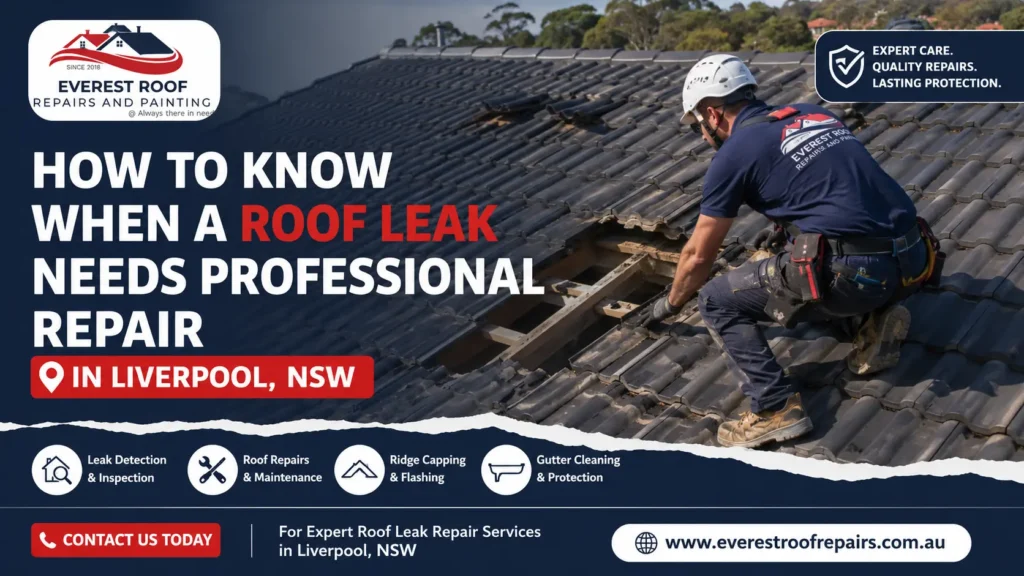
A leaking roof can begin with something as easy to overlook as a small ceiling stain, a damp patch, or occasional dripping after rain. However, these signs can indicate that water is getting into areas you cannot see. If the problem keeps returning, roof leak repair Liverpool, NSW, can help identify the underlying issue before it develops into more extensive damage.
About Everest Roof Repairs & Painting
Everest Roof Repairs & Painting provides professional roofing services across Sydney and surrounding areas, including roof repairs, inspections, maintenance, restoration, flashing, ridge capping, gutters, and other roofing requirements.
With experience across residential roofing projects, the team focuses on finding the actual cause of roofing problems and providing practical repair solutions rather than simply covering up visible symptoms.
Why You Shouldn’t Ignore a Leaking Roof
Your roof does much more than keep rain away from your home. It helps protect the ceiling, insulation, roof structure, and internal living areas from moisture.
A leak does not always appear as obvious dripping. Sometimes water enters slowly and remains inside the roof space before you notice a visible problem.
Common Warning Signs to Watch For
Homeowners should pay attention to:
- Brown or yellow marks on the ceiling
- Damp patches after rainfall
- Mould or mildew
- A persistent musty smell
- Wet insulation
- Damaged or bubbling plasterboard
- Swollen or deteriorating timber
- Water appearing around ceiling fixtures
The longer moisture remains inside the property, the greater the possibility of additional damage.
A Roof Leak May Not Be Directly Above the Stain
One common misconception is that the location of a ceiling stain will always show exactly where the roof is damaged.
Water Can Travel Through the Roof Structure
Rainwater can move underneath roofing materials, along timber members, or around roof penetrations before becoming visible inside the home. As a result, the point where you notice water may be some distance from the original entry point.
This is why simply sealing the visible area may not provide a lasting solution. Finding the source is an important part of dealing with recurring moisture.
5 Signs Your Roof May Need
Professional Attention
1. Water Is Dripping From the Ceiling
Active dripping is one of the clearest signs that water is entering your property.
If you notice water coming through the ceiling during or after rainfall, move furniture and valuables away from the affected area where possible. If water is close to a light fitting or other electrical component, avoid touching the wet area and seek appropriate professional assistance.
2. The Same Leak Keeps Coming Back
A recurring leak should not be considered normal, even if it disappears once the weather becomes dry.
Repeated moisture in the same area can be associated with damaged tiles, failed flashing, deteriorated ridge capping, roof valley problems, blocked gutters, or damaged seals around roof penetrations.
3. Brown or Yellow Ceiling Stains Appear
A ceiling stain can be an early indication of water intrusion. If the mark becomes darker after rainfall or gradually grows or returns after previous repairs, it deserves further investigation.
What Should You Look For?
Pay particular attention when a stain:
- Gets darker after rain
- Gradually increases in size
- Appears near an external wall
- Returns after a previous repair
- Comes with a musty smell
Early investigation can help establish whether the moisture is active or connected to previous water damage.
4. Roof Tiles Are Cracked or Displaced
Cracked, missing, or displaced roof tiles can create openings through which rainwater enters the roof structure. From the ground, you may notice missing tiles, uneven rows, broken pieces, or visible gaps.
Do not climb onto the roof yourself, particularly when it is wet. A professional can assess the roofing condition more safely.
5. You Notice Dampness or Mould in the Roof Space
Damp insulation, wet timber, mold, or a persistent musty smell can indicate moisture inside the roof space.
However, these signs do not always mean there is a roof leak. Ventilation and condensation can also contribute to moisture. A professional assessment can help distinguish between these possible causes.
What Causes Roof Leaks and When Should You Repair Them?
Once you notice signs of water ingress, the next question is simple: what is actually causing the problem? Finding the source is important because different roofing issues require different repair solutions. For homeowners searching for roof leak repair Liverpool, NSW, understanding these common causes can help you know when professional attention is necessary.
Common Causes of Roof Leaks
Damaged Roof Tiles and Roofing Materials
Cracked, broken, or displaced tiles can allow rainwater to enter the roof structure. Metal roofs can also develop problems through corrosion, damaged sheets, deteriorated fasteners, or vulnerable joints.
Even a small opening can become a significant entry point during heavy rainfall.
Deteriorated Flashing
Flashing protects areas where the roof meets walls, vents, pipes, chimneys, and other structures. When flashing becomes damaged or its seals deteriorate, water can find a pathway into the roof space.
A professional roofer can determine whether the flashing needs repair, resealing, or replacement.
Ridge Capping Problems
Cracked mortar, deteriorated pointing, or movement around ridge capping can create vulnerable areas on a tiled roof.
Repairing the internal ceiling stain alone will not solve the issue if the water is entering through the ridge area.
Roof Valleys and Gutters
Roof valleys carry rainwater away from different sections of the roof. Damage, deterioration, or blockages can contribute to water ingress.
Gutters and downpipes are equally important. Leaves and debris can restrict drainage, causing water to overflow around roof edges.
What Does a Professional Roof Inspection Check?
A professional inspection looks beyond the visible ceiling stain. The roofer checks the condition of the roof covering, flashing, ridge capping, valleys, gutters and other areas that could allow water into the property.
Key Areas Checked
- Cracked or displaced tiles
- Damaged roofing sheets
- Flashing and seals
- Ridge capping and pointing
- Roof valleys
- Gutters and downpipes
- Signs of moisture inside the roof space
This helps determine whether the problem is localized or whether several roofing components require attention.
Roof Repair or Roof Replacement?
A leaking roof does not automatically mean you need a complete replacement. The appropriate solution depends on the roof’s age, material, condition, and extent of damage.
Roof Problem | Possible Solution |
Cracked tile | Tile replacement |
Displaced tiles | Roof repair and adjustment |
Damaged flashing | Repair or replacement |
Deteriorated ridge capping | Repointing or rebedding |
Blocked gutters | Cleaning and maintenance |
Localised leak | Targeted roof repair |
Widespread deterioration | Restoration assessment |
When Is a Local Repair Enough?
If the roof is generally in good condition and the problem is limited to one or two areas, targeted repair may be sufficient. Replacing damaged tiles or repairing flashing can sometimes resolve the source without major roofing work.
When Should You Consider Restoration?
If several areas show signs of aging or previous repairs have repeatedly failed, a broader assessment may be more appropriate. A professional roofer can explain whether repair, restoration, or another solution best suits the roof.
For reliable roof repairs Liverpool, NSW, getting the cause assessed early can help prevent recurring water damage and unnecessary repair costs.
When Should You Call a Roofer in Liverpool, NSW?
A roof problem is easier to deal with when it is identified before moisture spreads into other parts of the home. If you have noticed recurring stains, dampness, damaged tiles or water entering the roof space, professional roof leak repair Liverpool NSW can help determine what needs attention and which repair option is appropriate.
When Should You Contact a Professional Roofer?
You should arrange a professional assessment if:
- Water is actively entering your home
- Ceiling stains are becoming larger
- The same area becomes wet after rain
- You notice mould or persistent dampness
- Roof tiles are cracked, missing or displaced
- Flashing looks damaged
- Gutters regularly overflow
- Water is entering the roof space
- Previous temporary repairs have not worked
- Your roof has suffered storm damage
A recurring problem should not simply be covered up. Identifying the underlying cause can help prevent the same issue from returning.
What Should You Do Before the Roofer Arrives?
Protect Your Home
Move furniture, electronics, and valuables away from the affected area. If water is dripping into a safe location, use a container to minimize the spread of water.
Stay Away From Electrical Hazards
If water is close to a light fitting, power point, or other electrical component, do not touch the wet area. Keep people away from it and seek appropriate professional assistance.
Don’t Climb Onto the Roof
A wet roof can be extremely slippery. Trying to locate or repair a leak yourself can create unnecessary safety risks.
Instead, take photographs of visible ceiling damage or roofing problems from a safe position and share them with the roofer.
How to Prepare for a Roof Inspection
You do not need specialist roofing knowledge before contacting a professional. A few simple details can make the assessment more useful.
Note When the Leak Started
Think about when you first noticed the problem:
- During heavy rain?
- Immediately after rainfall?
- During strong winds?
- Even when the weather is dry?
This can help identify patterns associated with the water ingress.
Photograph Visible Damage
Take clear photographs of ceiling stains, damp patches, mold, or visible roof damage from a safe location.
Mention Previous Repairs
If the roof has already been repaired, explain what work was completed and when. Recurring leaks after previous repairs may indicate that the original source was not fully addressed.
Choosing the Right Roofing Service
When looking for roof repairs Liverpool NSW, don’t choose a contractor based only on the lowest price.
Look for Relevant Experience
A roofing professional should have experience dealing with the type of problem affecting your property, whether that involves leaking tiles, flashing, gutters, ridge capping, or water ingress.
Understand What the Repair Includes
Before approving work, ask:
- What is causing the leak?
- Which roofing components need attention?
- Will damaged materials be replaced?
- Will surrounding areas be checked?
- What work is included in the quote?
Clear information helps you understand what you are paying for and what outcome to expect.
Focus on a Long-Term Solution
A cheap temporary patch may not be the best option if the same problem returns soon afterwards. The aim should be to address the underlying roofing issue rather than repeatedly treating the visible symptom.
Everest Roof Repairs & Painting Experience
Everest Roof Repairs & Painting has experience working on residential and commercial roofing projects across Sydney and surrounding areas.
500+ Projects Completed Successfully
Everest highlights 500+ completed projects, covering different roofing requirements and property conditions.
300+ Roof Leaks Fixed Across Sydney
The company states that it has fixed 300+ roof leaks across Sydney, giving the team experience with different types of water-ingress problems.
8+ Years of Roofing Experience
Everest has 8+ years of roofing experience and provides services including roof repairs, inspections, restoration, roof painting, flashing, ridge capping, gutters, skylight repairs, sarking and insulation.
For homeowners dealing with recurring moisture, choosing an experienced roofing team can make it easier to investigate problems that are not immediately visible.
Liverpool Homeowner Roof Leak Checklist
Before deciding whether to wait or call a roofer, ask yourself:
Question | What It May Mean |
Is water entering the home? | Professional attention may be needed |
Does the problem return after rain? | There may be an unresolved roofing issue |
Are tiles damaged or missing? | Water may have an entry point |
Is there mould or damp insulation? | Moisture may be present in the roof space |
Are gutters overflowing? | Drainage could be contributing |
Has the roof been patched before? | The underlying problem may remain |
If several of these signs apply to your property, arranging an inspection is a sensible next step.
Don’t Wait Until the Next Heavy Rain
A roof can allow small amounts of moisture into a property even when there is no visible dripping. Over time, repeated moisture can affect ceilings, insulation, timber, and other internal components.
This does not mean every roof issue requires emergency work. However, recurring warning signs should not be treated as normal.
A Simple Decision
One small stain that never returns:
Keep monitoring it, particularly after rainfall.
A stain that repeatedly becomes wet:
Arrange a professional assessment.
Active water entering your home:
Seek professional assistance promptly.
Major storm or structural damage:
Avoid accessing the roof and arrange an appropriate inspection.
Get Your Roof Checked Before the Problem Gets Worse
If you have noticed water stains, dampness, damaged tiles, or recurring moisture, don’t wait for another major rainfall event before investigating the problem.
Everest Roof Repairs & Painting can assess your roofing requirements and discuss appropriate repair, maintenance, or restoration options.
Ready to Discuss Your Roofing Problem?
Contact Everest Roof Repairs & Painting for professional roofing assistance.
This anchor can be used to link the blog to your homepage naturally without repeatedly using the exact-match keyword.
Frequently Asked Questions
How do I know if my roof leak is serious?
A leak deserves attention when water is actively entering the property, ceiling stains are increasing, the same area repeatedly becomes wet, or you notice mold, damp insulation, or visible roof damage.
Can a roof leak get worse even when it stops dripping?
Yes. Water ingress can be intermittent and may only become visible during particular rainfall or wind conditions. Moisture can also remain within concealed areas after the visible dripping stops.
Should I repair a leaking roof myself?
It is generally better to avoid climbing onto a wet or damaged roof. Roofing work can involve significant fall and safety risks, particularly when the source of the leak is difficult to locate.
Does every leaking roof need to be replaced?
No. A localised problem such as a damaged tile, flashing issue or deteriorated ridge section may be repairable. The appropriate solution depends on the roof’s overall condition and the extent of the damage.
What should I do if my roof starts leaking during heavy rain?
Move valuables away from the affected area, avoid wet electrical fittings, stay off the roof, and contact a professional roofer when it is safe to arrange an assessment.
Conclusion
A leaking roof does not always mean that an entire roof needs to be replaced. In many cases, identifying the problem early can allow a localized repair to be considered before moisture causes more extensive damage.
If you are experiencing recurring water ingress, ceiling stains, damaged tiles, or other roofing concerns, contact Everest Roof Repairs & Painting to discuss your requirements and arrange the appropriate roofing assistance.