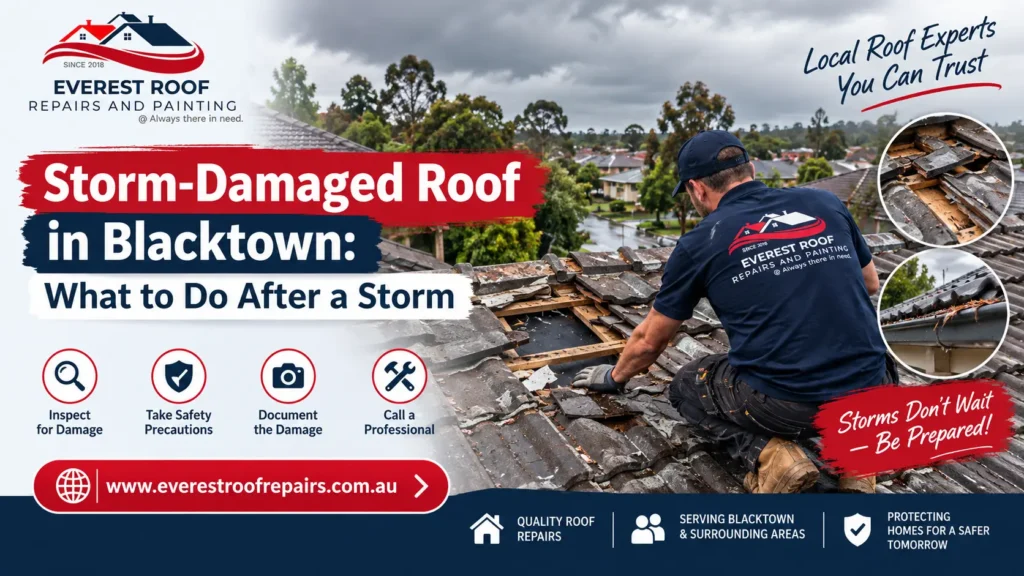
If you have a storm-damaged roof in Blacktown, the first priority is to make sure your home and everyone inside it are safe. Severe weather can leave behind more than a few broken tiles. Strong winds, heavy rain, hail, and falling branches can damage roofing materials, loosen ridge caps, affect flashing, and create openings where water can enter. Acting quickly can help limit further damage and give you a clearer idea of what your roof needs.
Everest Roof Repairs is a Sydney-based roofing company helping homeowners with roof repairs, roof leaks, inspections, maintenance, and restoration. With practical roofing experience and a focus on reliable workmanship, our team helps property owners protect their homes when roofing problems arise.
How Can a Severe Storm Damage Your Roof?
A roof is designed to protect your home from changing weather conditions, but severe storms can place considerable pressure on its individual components.
High winds may lift or shift roof tiles. Hail can crack or damage roofing materials, while heavy rainfall can expose existing weak points around flashing, valleys, and roof penetrations. Falling branches can also cause direct impact damage to tiles, metal sheets, or other parts of the roofing system.
The damage is not always easy to see immediately.
A roof may look relatively normal from the ground, while a cracked tile or loose flashing is allowing rainwater into the roof cavity. Water can then travel through the roof space before becoming visible inside the property.
Common Signs of Storm Damage
After severe weather, look for visible signs from a safe location, including:
- Missing roof tiles
- Cracked or broken tiles
- Tiles that have moved out of position
- Loose or damaged ridge capping
- Bent or lifted flashing
- Damaged metal roofing sheets
- Blocked or damaged gutters
- Fallen branches or debris
- Water stains on ceilings
- Damp patches on walls
- Dripping water
- Damp insulation
You do not need to find every damaged area yourself. If something looks unusual after a storm, a professional inspection can help determine whether there is a larger problem.
Don’t Climb Onto a Damaged Roof
One of the most important decisions after severe weather is knowing when not to inspect the roof yourself.
Wet roofing materials can become extremely slippery. Tiles may have cracked or shifted, metal sheets can be unstable, and branches resting on the roof may have caused damage that is not immediately visible.
Instead, begin with a ground-level inspection.
Walk around the property and look for missing tiles, damaged gutters, fallen branches, and obvious openings. You can also inspect the inside of your home for signs of water entry.
If the roof appears unstable or there is a serious safety concern, stay away from the affected area and arrange professional assistance.
Check Your Ceilings and Interior Areas
Sometimes the first evidence of roof damage appears inside the home rather than outside.
Water entering through damaged roofing can travel before it reaches the ceiling. This means the position of a water stain does not necessarily identify the exact location of the roof leak.
Indoor Warning Signs
Check for:
- New brown or yellow ceiling stains
- Fresh damp patches
- Peeling or bubbling paint
- Water dripping from ceilings
- Damp insulation
- Musty smells
- Moisture around skylights
- Damp areas near walls
- Water around roof penetrations
- Moisture near electrical fittings
If water is close to an electrical fitting, avoid touching the fitting or attempting to investigate it yourself. Address the immediate safety concern first.
Why You Shouldn’t Ignore a Small Leak
A small leak can be easy to dismiss once the rain stops.
The problem is that the opening in the roof may still be there. During the next period of heavy rain, water can enter through the same area again and gradually affect ceilings, insulation, timber, and internal finishes.
For example, a cracked tile may allow a small amount of water into the roof cavity. That water can move along the underside of the roof before appearing as a stain in a completely different location.
This is why simply painting over a ceiling mark or replacing one visible tile may not solve the underlying problem.
The source of the water entry needs to be identified.
What Should You Do Immediately After a Storm?
Once the property is safe, focus on documenting the problem and preventing additional damage.
Exterior Check
From ground level, look for:
- Missing or broken tiles
- Displaced tiles
- Loose ridge caps
- Damaged flashing
- Fallen branches
- Damaged gutters
- Visible holes or exposed roofing areas
- Debris around the roof
Interior Check
Inside the property, look for:
- New ceiling stains
- Active dripping
- Damp walls
- Wet insulation
- Musty odours
- Signs of repeated leaking
- Water around roof penetrations
Document What You Find
Take clear photographs and videos of visible damage from a safe location. If you have noticed when the problem started, make a note of the approximate time and weather conditions.
Keep any relevant repair records, inspection reports, quotes, or receipts.
If you have home insurance, contact your insurer and ask about the appropriate process before authorizing permanent repairs where required by your policy.
When Is It Time to Call a Roofer?
Professional assistance is particularly important when you have an active leak, missing roofing materials, or damage that cannot be safely assessed from the ground.
You should consider arranging a roof inspection if you notice:
- Water entering the property
- Missing or broken tiles
- Loose ridge capping
- Damaged flashing
- Damaged gutters
- Fallen branches
- Repeated leaking after rainfall
- New ceiling stains
- Dampness in the roof cavity
- Roofing materials that appear unstable
For homeowners searching for a storm-damaged roof in Blacktown, an early professional assessment can help identify whether the property needs urgent repair, safe work, targeted maintenance, or broader restoration.
Don’t Assume You Need a New Roof
Storm damage does not automatically mean the entire roof needs to be replaced.
In some situations, the problem may be limited to a handful of broken tiles, a damaged section of flashing, or loose ridge capping. In other cases, the storm may reveal existing deterioration that requires more comprehensive work.
The right decision depends on the roof’s material, age, existing condition, and extent of damage.
A professional inspection gives homeowners a clearer understanding of what actually needs to be done before committing to major work.
What Happens Next?
Once the immediate condition of the property has been assessed, the next step is understanding the repair options.
This may include emergency make-safe work to reduce further water entry, targeted roof repairs, leak detection, gutter maintenance, or a more extensive restoration project.
The important thing is to deal with the actual cause rather than only the visible symptom.
Why a Professional Roof Inspection Matters After a Storm
After severe weather, roof damage is not always easy to identify from the ground. Broken tiles and fallen branches may be obvious, but problems with flashing, ridge capping, valleys, gutters, roof sheets, or seals can be much harder to notice.
In some situations, water can enter through a small opening and travel underneath roofing materials before appearing as a ceiling stain inside the house. This means your roof may have suffered damage even when there is no obvious hole or missing section.
For homeowners dealing with a storm-damaged roof in Blacktown, arranging a professional inspection can help identify hidden problems before they develop into more expensive repairs.
What Does a Professional Roof Inspection Check?
A proper inspection should look at more than just the most visibly damaged section. An experienced roofing professional can assess different parts of the roof and determine which areas need immediate attention.
Roof Area | Common Storm-Related Problems |
Roof tiles | Cracked, broken, loose, or missing tiles |
Ridge capping | Cracks, movement, or loose sections |
Flashing | Lifting, gaps, or damaged seals |
Metal roofing | Dents, movement, or damaged fixings |
Valleys | Debris, blockages, or damage |
Gutters | Leaves, branches, debris, or physical damage |
Downpipes | Blockages or restricted water flow |
Roof penetrations | Damaged seals around vents and pipes |
Ceiling areas | Water stains, dampness, or signs of leaks |
An inspection is especially important if you heard roofing materials moving during the storm, discovered broken materials around your property, noticed water entering your home, or found new ceiling stains.
Make-Safe Work Can Protect Your Property
After significant roof damage, permanent repairs may not always be the first step. If part of the roof has been exposed, temporarily protecting the affected area can help reduce the risk of additional water entering the property during subsequent rainfall.
Make-safe work may involve temporary patching, suitable tarp installation, sealing exposed areas, or addressing an immediate water-entry point. The appropriate solution depends on the type and severity of the damage.
Everest Roof Repairs provides make-safe services, roof reports, and inspections in Sydney, helping homeowners understand the condition of their roof and identify the next appropriate step.
Should You Contact Your Insurance Provider?
If severe weather has caused significant property damage, contacting your insurance provider may be an important part of the recovery process. Before arranging major permanent repairs, check your policy and ask your insurer what documentation or assessment may be required.
It is useful to photograph and record visible damage as soon as possible, provided you can do so safely. Photographs can help document the condition of the property before repair work begins.
You should also keep records of relevant expenses and roofing documents, including inspection reports, invoices, and temporary repair work.
What Should Homeowners Document?
Create a simple record containing:
- Date and approximate time of the storm
- Photos of visible roof damage
- Broken or missing roofing materials
- Ceiling marks or water stains
- Damaged gutters and downpipes
- Fallen branches or other debris
- Temporary protection installed after the storm
- Inspection reports
- Repair quotes and invoices
Good documentation can make it easier to explain the extent of the damage and keep track of the work completed.
Does Storm Damage Mean You Need a New Roof?
Not necessarily.
A storm can make a roof look much worse than the actual underlying problem. In many cases, the damage may be limited to a few broken tiles, damaged flashing, loose ridge caps, blocked gutters, or isolated areas where water has entered.
If the rest of the roof is structurally sound and in reasonable condition, targeted repairs may be all that is required.
On the other hand, extensive damage combined with an aging or already deteriorated roof may require more comprehensive work. The decision should be based on a professional assessment rather than simply assuming that replacement is necessary.
Common Roof Repair Solutions
Depending on the inspection findings, roofing work may include:
- Replacing broken or missing tiles
- Repairing damaged flashing
- Ridge cap rebedding and repointing
- Repairing roof leaks
- Fixing damaged metal roofing
- Clearing gutters and downpipes
- Replacing damaged roofing components
- Sealing vulnerable areas
- Carrying out broader restoration work where required
Everest Roof Repairs provides residential and commercial roof repairs and maintenance in Sydney, with solutions based on the actual condition of the roof.
Why You Shouldn’t Delay Necessary Repairs
A damaged roof can become more difficult to repair when it remains exposed to rain and changing weather conditions. A small opening can allow moisture to enter areas that are not immediately visible, potentially affecting ceilings, insulation, and other parts of the property.
That does not mean homeowners should rush into unnecessary repairs. The better approach is to have the damage assessed, protect vulnerable areas where necessary, and then arrange suitable repair work.
For homeowners searching for help with a storm-damaged roof in Blacktown, professional assessment can provide a clearer understanding of the problem and help determine what should happen next.
When Roof Restoration May Be the Better Long-Term Option
Sometimes a severe storm does not create every problem—it simply exposes weaknesses that were already present.
Older roofs may have deteriorated pointing, worn coatings, aged tiles, previous repair areas, or other maintenance issues. If several parts of the roof require attention, restoration may provide a more practical long-term solution than repeatedly repairing isolated problems.
Roof restoration can include cleaning, repairing, repointing, and repainting, depending on the roof’s condition and material.
The key is to deal with immediate storm-related problems first and then consider the roof’s longer-term condition, maintenance requirements, and expected lifespan.
Why Experience Matters After Severe Weather
When your home has been affected by severe weather, you want a roofing professional who can identify the immediate issue without overlooking other vulnerable areas.
Everest Roof Repairs has completed 500+ projects successfully, fixed 300+ roof leaks across Sydney, and brings 8+ years of roofing experience to residential and commercial roofing work.
Whether the roof needs an urgent make-safe solution, targeted repairs, ongoing maintenance, or broader restoration, a proper assessment can help homeowners make a more informed decision.
How to Prevent Further Roof Damage After a Storm
Once the immediate storm damage has been inspected and addressed, the next step is thinking about prevention. Severe weather cannot always be predicted, but regular roof maintenance can help identify weak areas before the next major storm arrives.
Loose tiles, deteriorating ridge capping, blocked gutters, damaged flashing, and aging roof materials can all become bigger problems when exposed to strong winds and heavy rainfall.
Regular maintenance gives homeowners an opportunity to deal with these issues before they contribute to water ingress or more extensive damage.
Simple Roof Maintenance Tips for Blacktown Homeowners
A few practical habits can make a difference:
- Arrange periodic professional roof inspections.
- Replace cracked or missing roof tiles promptly.
- Keep gutters and downpipes clear of leaves and debris.
- Check visible flashing for signs of deterioration.
- Address small leaks instead of allowing them to continue.
- Keep nearby trees properly maintained where appropriate.
- Look for ceiling stains after periods of heavy rain.
- Keep records of previous roof repairs and maintenance.
These steps do not guarantee that a roof will avoid storm damage, but they can help reduce the risk of existing weaknesses becoming serious problems.
Homeowner Checklist After Severe Weather
If you have recently experienced strong winds, heavy rain, or a severe storm, use this checklist to decide what needs attention.
Exterior Checklist
☐ Check the ground around the property for broken tiles or roofing materials.
☐ Look for visible sections of roofing that appear displaced.
☐ Check gutters for excessive leaves, branches, or storm debris.
☐ Look for damaged downpipes or detached gutter sections.
☐ Check for fallen branches that may have impacted the roof.
☐ Do not climb onto the roof to inspect damage yourself.
Interior Checklist
☐ Look for new water stains on ceilings.
☐ Check walls near the ceiling for damp patches.
☐ Look for dripping or visible water entry.
☐ Check rooms directly underneath the roof after heavy rainfall.
☐ Pay attention to unusual damp or musty areas.
☐ Photograph visible damage where it is safe to do so.
Documentation Checklist
☐ Record when the storm occurred.
☐ Take clear photographs of visible damage.
☐ Keep inspection reports and repair documentation.
☐ Keep invoices for temporary or permanent roofing work.
☐ Contact your insurer if appropriate under your policy.
This simple process can help you stay organized while deciding what needs to happen next.
When Should You Call a Professional Roofer?
Not every roofing issue requires an emergency call, but certain warning signs should not be ignored.
You should consider contacting a professional roofer if you notice:
- Water entering through the ceiling
- Missing or broken roof tiles
- Loose ridge capping
- Damaged metal roofing
- Large branches resting on the roof
- Significant gutter damage
- Repeated leaks after rainfall
- Visible gaps or exposed roofing areas
- Sections of roofing that have moved
- Ceiling damage following severe weather
If you are dealing with a storm-damaged roof in Blacktown, getting professional advice early can help identify whether you need a temporary make-safe solution, targeted repair, or more extensive roofing work.
What Makes a Good Storm Damage Roofing Service?
When choosing a roofing professional, homeowners should look beyond simply finding the cheapest quote.
A reliable roofing company should be able to explain what has been damaged, what needs immediate attention, and which repairs can safely wait. Clear communication is especially important when the property has experienced severe weather and you may already be dealing with water damage or insurance concerns.
Experience with different roofing materials is also valuable. Tiled roofs and metal roofs can respond differently to strong winds, falling debris, and heavy rainfall, so the repair approach should match the roofing system.
Why Choose Everest Roof Repairs?
Everest Roof Repairs provides residential and commercial roofing services across Sydney, helping homeowners address roof leaks, storm-related damage, maintenance requirements, and broader restoration needs.
The company has completed:
- 500+ Projects Completed Successfully
- 300+ Roof Leaks Fixed Across Sydney
- 8+ Years of Roofing Experience
Services include roof repairs and maintenance, emergency roofing assistance, roof leak detection, roof restoration, gutter cleaning, and ridge capping repairs.
The focus is on assessing the actual condition of the roof and recommending practical work rather than automatically assuming that complete roof replacement is required.
For homeowners who need professional assistance after severe weather, you can explore the available roofing services or contact Everest Roof Repairs to discuss your situation.
Don’t Wait Until the Next Storm
One of the easiest mistakes homeowners can make is assuming that a roof is fine simply because there is no major leak immediately after a storm.
Some damage may remain unnoticed until the next period of heavy rainfall. A loose tile, damaged flashing point, or weakened roof section can allow water to enter later, turning a manageable repair into a more disruptive problem.
If you have noticed signs of damage, arranging an inspection sooner rather than later gives you a better opportunity to understand the condition of the roof and plan the appropriate repair.
Frequently Asked Questions
1. What should I do first if my roof is damaged after a storm?
Start by keeping everyone away from potentially unsafe areas of the roof. Check inside the property for signs of water entry and, if safe, photograph visible damage from the ground. A professional roof inspection can then help determine the extent of the problem and what action is required.
2. Can I inspect a storm-damaged roof myself?
You can check for visible signs of damage from a safe position on the ground, but climbing onto a damaged roof is not recommended. Wet surfaces, loose tiles, structural damage, and debris can create serious safety risks. A qualified roofing professional can carry out a more appropriate inspection.
3. Does every storm-damaged roof need to be replaced?
No. The required work depends on the extent of the damage and the existing condition of the roof. Some roofs may only require tile replacement, flashing repairs, ridge capping work, or other targeted repairs. More extensive restoration or replacement may be considered when damage is widespread or the roof is already significantly deteriorated.
4. How can I tell if storm damage has caused a roof leak?
Common signs include ceiling stains, damp patches, dripping water, peeling paint, moisture around light fittings or new water marks after rainfall. Some leaks may not appear immediately, so it is worth paying attention to interior areas following severe weather.
5. How soon should I arrange a roof inspection after a severe storm?
If you notice visible damage, water entry, or other warning signs, arranging an inspection as soon as reasonably possible is a sensible approach. Early assessment can help identify problems before additional rainfall causes further damage and can help you understand whether temporary protection or permanent repairs are needed.
Conclusion
Severe weather can cause anything from a few broken tiles to widespread roofing damage. The most important thing homeowners can do is avoid taking unnecessary risks, check for visible signs of water entry, document the damage, and arrange a professional assessment when required.
A proper inspection can help determine whether the roof needs a temporary make-safe solution, individual repairs, maintenance, or more comprehensive restoration.
If your property has been affected by severe weather, don’t ignore small warning signs. Early action can help protect your home and prevent avoidable roofing problems from becoming more expensive and disruptive.
Need Help With Storm-Related Roof Damage?
If you suspect your roof has been affected by strong winds, heavy rain, or falling debris, Everest Roof Repairs can assess the condition of your roof and help you understand the next step.
Contact Everest Roof Repairs today to arrange a professional roof inspection or discuss the repair options for your property.